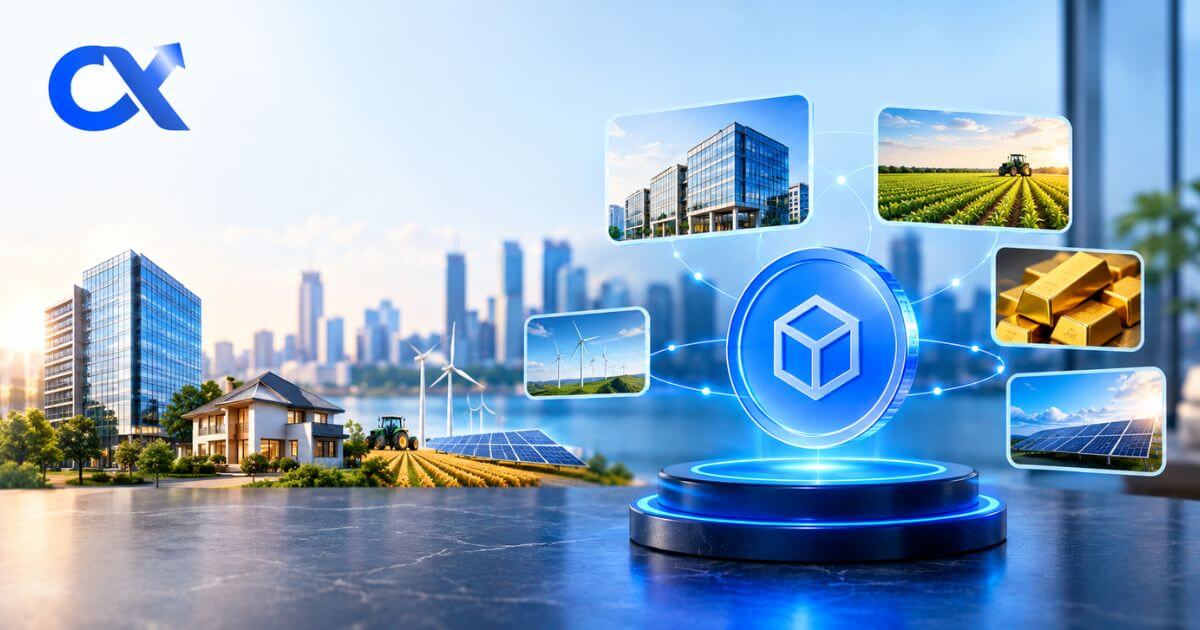
Real-world asset tokenization is changing how businesses can issue, distribute, and manage ownership in traditionally illiquid assets. From real estate to debt instruments, blockchain technology can transform rights associated with these assets into programmable digital tokens.
But how to tokenize real-world assets successfully involves far more than creating a token and deploying a smart contract. A viable tokenization model must connect the underlying asset to its legal structure and other operations to run a fully functional tokenization platform.
For businesses looking to enter this market, building every component from the ground up can also create substantial development and operational complexity. A white-label tokenization platform provides pre-built infrastructure that you can customize to your branding and business requirements.
This step-by-step guide explains the real-world asset tokenization process, from selecting the underlying asset and establishing its legal structure to issuing tokens, onboarding investors, and creating compliant secondary-market liquidity.
How Does Real-World Asset Tokenization Work?
Real-world asset tokenization converts rights or interests associated with an off-chain asset into digital tokens recorded on a blockchain.
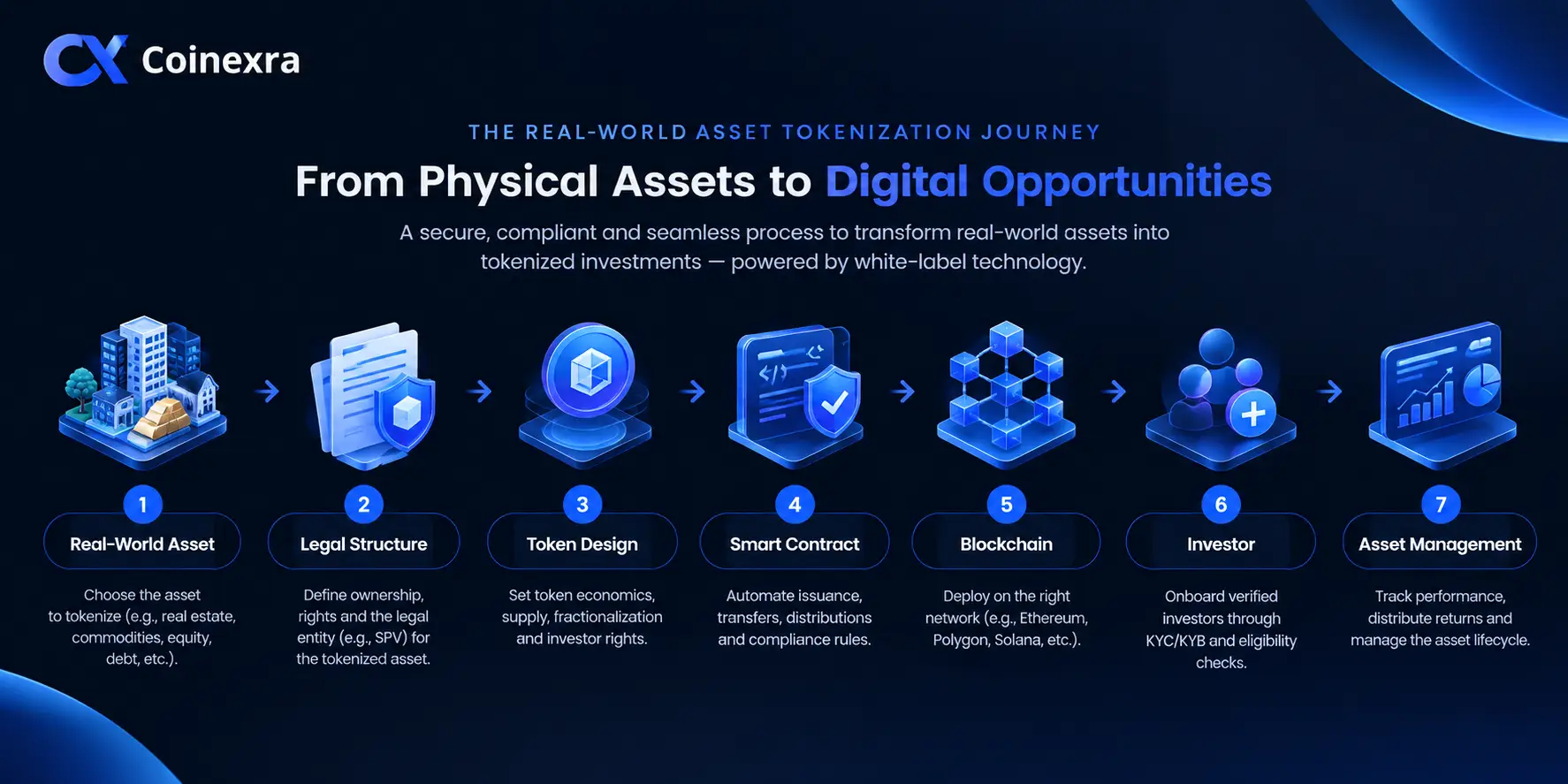
However, each stage involves decisions that determine whether the resulting tokenized asset can actually function within a real business environment.
A typical tokenization ecosystem connects several layers:
Underlying Asset: Real estate, equity, debt, commodities, funds, or another eligible asset.
Legal Structure: Defines ownership, beneficial interests, revenue rights, debt claims, or other investor rights.
Asset Verification: Establishes that the underlying asset exists, is properly owned, and can support the proposed token structure.
Token Economics: Determines supply, fractionalization, pricing, rights, restrictions, and distribution mechanisms.
Compliance Layer: Handles KYC/KYB, AML, investor eligibility, sanctions screening, and transfer restrictions where applicable.
Blockchain Layer: Records token ownership and executes programmable transactions.
Investor Layer: Provides onboarding, wallets, portfolios, subscriptions, and transaction capabilities.
Liquidity Layer: Supports compliant transfers, marketplaces, or secondary trading where permitted.
Asset Servicing Layer: Handles distributions, reporting, valuation updates, corporate actions, and redemptions.
This is why tokenizing assets should be viewed as a complete business and technology lifecycle rather than simply a blockchain development task. For businesses launching multiple tokenized assets, Coinexra’s white-label tokenization platform provides the underlying technology through a configurable infrastructure layer.
Step-by-Step Real-World Asset Tokenization Process
Turning a real-world asset into a blockchain-based investment requires more than simply creating a digital token. The following step-by-step guide on how to tokenize real-world assets breaks down each stage.
Step 1 — Select the Real-World Asset
The first step is deciding what asset should be tokenized. Not every asset is equally suitable for tokenization. Businesses should evaluate both the characteristics of the underlying asset and whether there is a viable investor proposition.
Potential assets include:
- Commercial and residential real estate
- Private company equity
- Debt instruments
- Bonds
- Investment funds
- Gold and other commodities
- Carbon credits
- Art and collectibles
A business planning to tokenize multiple asset classes should avoid choosing infrastructure that only supports one asset type. A Coinexra configurable white-label tokenization platform can provide a foundation for expanding from one asset category into others without rebuilding the entire technology stack.
Step 2 — Establish Legal Ownership and Asset Rights
This is one of the most important steps in the entire real-world asset tokenization process. Before creating tokens, the business needs to establish what the token legally represents.
Depending on the structure, a token could represent:
- An ownership interest
- A beneficial interest
- An equity position
- A debt claim
- A share of revenue
- A fractional interest
- A right to distributions
- A redemption claim
- Another contractual or economic right
The legal framework should define:
- Who owns the underlying asset
- What rights investors receive
- How income is distributed
- Whether investors have voting rights
- How tokens can be transferred
- What restrictions apply
- How redemption works
- What happens if the underlying asset is sold
Tokenization does not automatically mean legal ownership is transferred simply because a token exists on a blockchain. The relationship between the token and the underlying asset must be established through the appropriate legal and contractual structure.
Step 3 — Verify and Perform Due Diligence on the Asset
Once the legal structure is established, the underlying asset needs to be thoroughly verified. Investors ultimately need confidence that the digital representation corresponds to a legitimate underlying asset.
Due diligence may include:
- Ownership verification
- Property or asset records
- Corporate documentation
- Existing liens and encumbrances
- Independent valuation
- Insurance documentation
- Asset authenticity
- Financial records
For example, if a company is tokenizing a commercial property, simply uploading the property's information to a blockchain does not establish its authenticity or value.
The business should establish:
- Does the property exist?
- Who legally owns it?
- What is it worth?
- Are there liabilities attached to it?
- What rights will investors receive?
The tokenization platform can support the digital workflow around asset onboarding, documentation, approvals, records, permissions, and audit trails.
Step 4 — Define Token Economics, Investor Rights, and Compliance Rules
Once the asset and legal framework are established, the business can design the token itself. This involves deciding how the asset will be represented digitally and what investors can do with their tokens.
Define Token Economics
Important parameters include:
- Total token supply
- Initial token price
- Fractional ownership
- Minimum investment
- Investor allocation
- Lock-up periods
- Vesting
- Distribution mechanisms
- Redemption conditions
- Buyback mechanisms
- Token burning
- Transferability
Define Investor Rights
The business should clearly establish:
- Ownership or economic rights
- Revenue or dividend rights
- Voting rights
- Redemption rights
- Transfer rights
- Information rights
- Distribution rights
Define Compliance Rules
Compliance requirements should also be reflected in the platform and token transfer logic where applicable. These may include:
- KYC/KYB
- AML screening
- Sanctions screening
- Investor eligibility
- Wallet whitelisting
- Geographic restrictions
- Transfer restrictions
- Transaction monitoring
- Audit trails
Regulatory requirements can vary significantly depending on the asset, jurisdiction, and activities performed by the platform. For a deeper understanding of the approvals and regulatory considerations involved, see our guide to licenses required to start a tokenization platform.
This is where a configurable white-label platform can become particularly valuable: instead of building every compliance workflow independently, businesses can configure the required controls around their offering.
Step 5 — Choose the Right Blockchain
The blockchain becomes the infrastructure on which the token is issued and transferred. There is no single blockchain that is automatically best for every RWA project. Businesses should evaluate:
- Transaction costs
- Network performance
- Security
- Ecosystem maturity
- Wallet compatibility
- Institutional adoption
- Developer ecosystem
- Scalability
- Compliance requirements
The blockchain should support the business model and compliance structure, rather than being selected simply because it is popular. Coinexra's multi-chain tokenization infrastructure can allow businesses to expand their tokenization ecosystem without rebuilding their entire platform around a different blockchain.
Step 6 — Select the Appropriate Token Standard
The token standard determines how the digital asset behaves on the selected blockchain. Common token standards include
- ERC-20
- ERC-1400
- ERC-721
- ERC-1155
The right standard depends on:
- Asset characteristics
- Fungibility
- Fractionalization requirements
- Transfer restrictions
- Investor rights
- Compliance requirements
- Smart contract functionality
For example, a fractionalized investment structure may require a fundamentally different token architecture from a unique piece of art. A business should ideally choose infrastructure that supports multiple token standards and configurable token models.
Step 7 — Build and Audit the Smart Contract
Smart contracts provide the programmable logic behind the token. Depending on the asset and structure, smart contracts can manage:
- Token minting
- Token burning
- Transfers
- Ownership records
- Investor restrictions
- Vesting
A smart contract vulnerability can affect token ownership, transfers, distributions, or other critical functions. For an RWA platform, the smart contract is only one component of the overall infrastructure, but it can still become a significant security and operational risk if deployed without appropriate testing and review.
Step 8 — Connect the Token to the Underlying Asset
The token needs a reliable relationship with the asset it represents.
A simplified structure is:
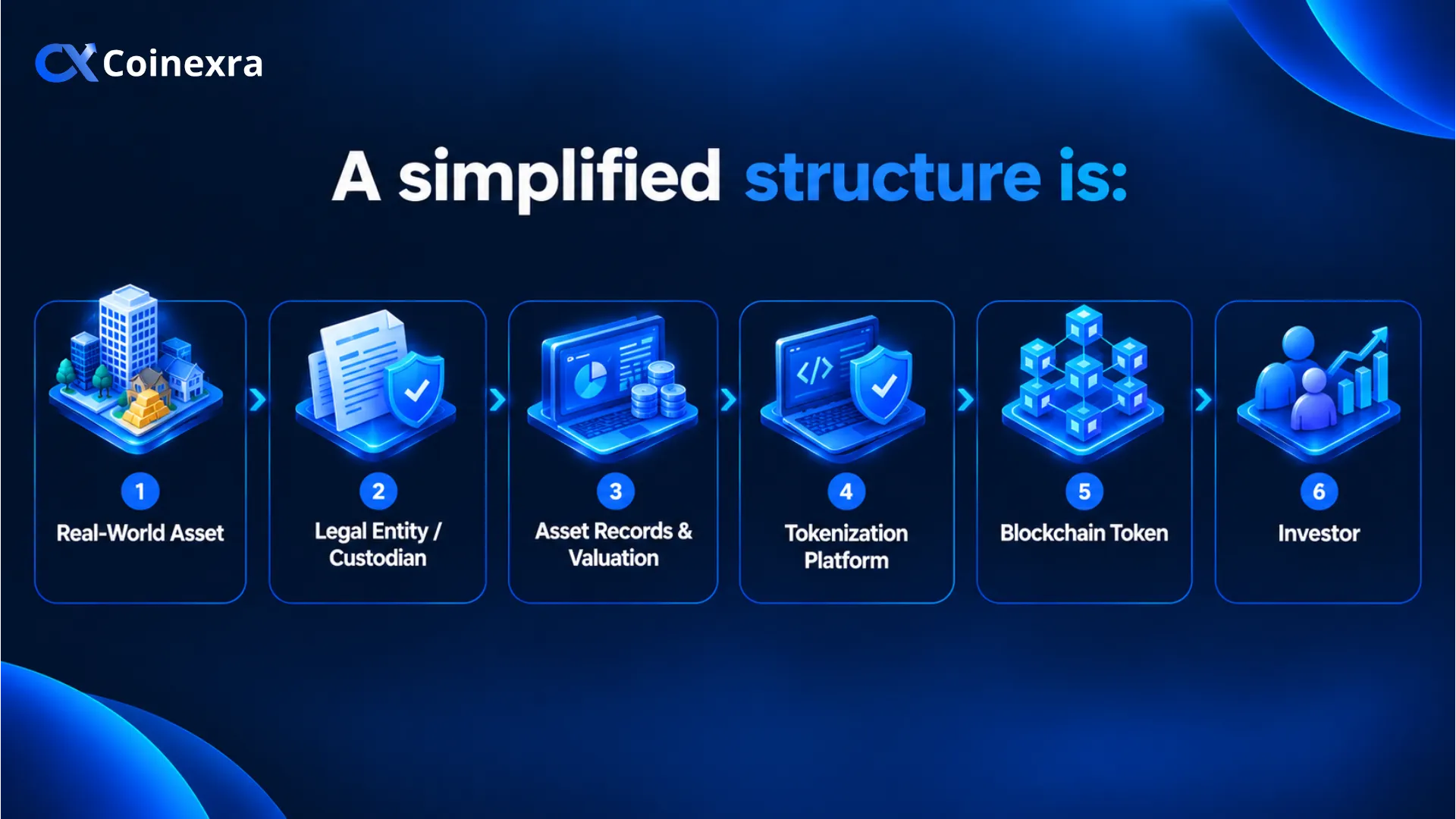
The objective is to maintain a reliable connection between the on-chain representation and the off-chain asset or rights it represents. This is particularly important when asset values, income, ownership status, or other information change over time.
Step 9 — Launch the Tokenized Asset Offering
Once the legal, asset, compliance, and technical components are ready, the business can launch its offering according to the applicable regulatory structure.
The process can include:
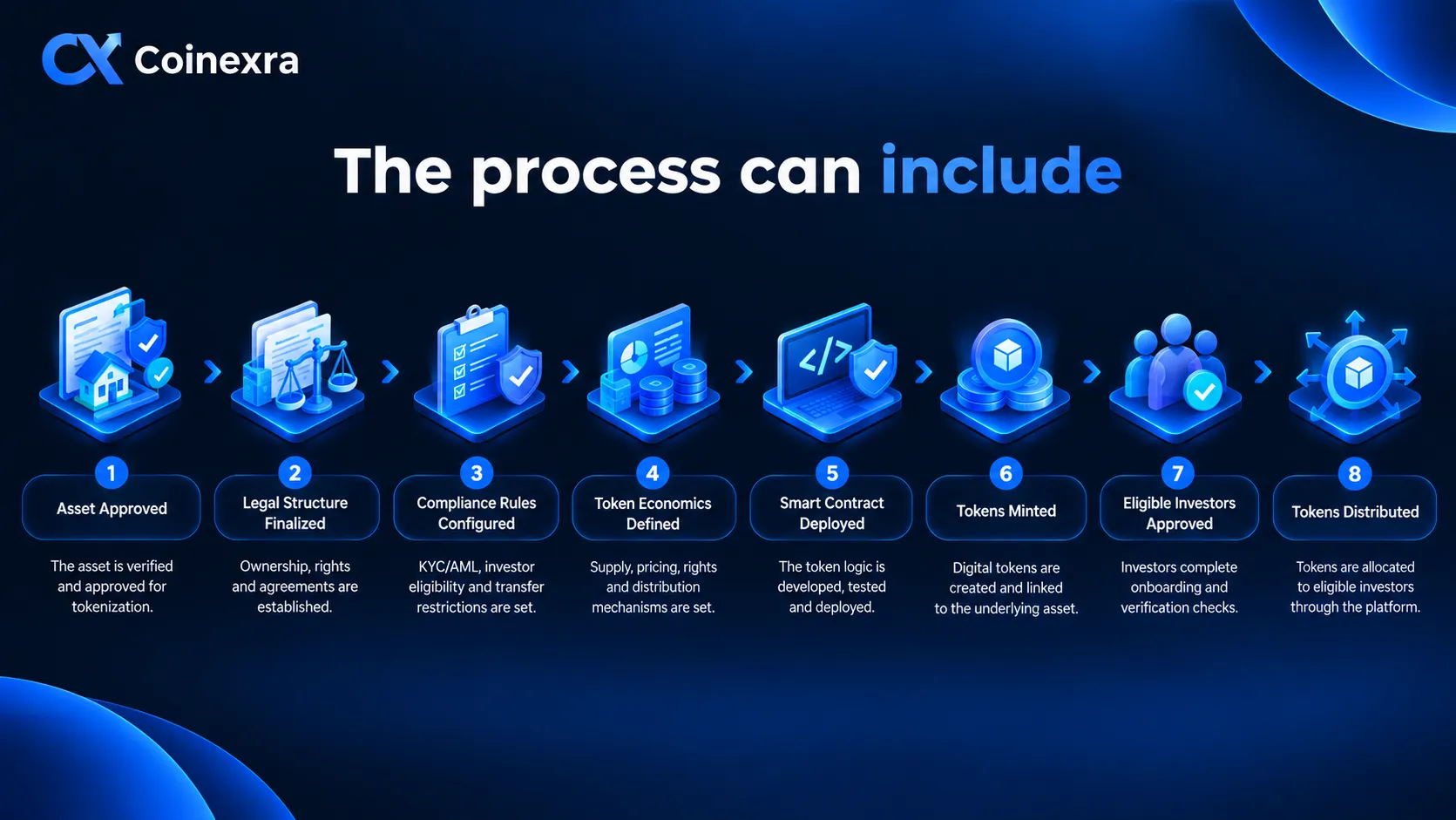
These terms should not be treated as identical. Issuance is the creation and authorization of the tokenized asset. Distribution is the process of allocating those tokens to eligible investors.
Separating these processes provides greater control over compliance, allocation, and investor management.
Step 10 — Enable Secondary Trading and Liquidity
Tokenization can make ownership or economic interests digitally transferable, but tokenization alone does not guarantee liquidity. A business needs an actual market structure where permitted investors can potentially buy, sell, or transfer the tokenized asset.
Potential liquidity mechanisms include:
- Secondary marketplaces
- Permissioned trading venues
- P2P transfers
- Exchange integrations
- Internal marketplaces
- Liquidity providers
- Approved investor networks
A strong tokenization platform should therefore consider the full asset lifecycle, not just token issuance.
What Does a Complete RWA Tokenization Architecture Look Like?
A complete RWA ecosystem typically involves multiple interconnected layers rather than one blockchain application.
1. Asset Layer
The asset layer represents the real-world asset being brought on-chain, such as real estate, private equity, debt, funds, commodities, or infrastructure. This layer provides the underlying economic value that the tokenized asset is designed to represent.
2. Legal & Compliance Layer
The legal and compliance layer establishes the ownership structure, investor rights, eligibility requirements, and transfer restrictions associated with the tokenized asset. It can incorporate processes such as KYC/KYB, AML screening, investor accreditation, geographic restrictions, and wallet whitelisting.
3. Tokenization Layer
The tokenization layer converts the legally structured asset or economic interest into digital tokens according to the defined token model. It manages elements such as token supply, fractionalization, issuance, ownership records, and token lifecycle operations.
4. Smart Contract Layer
The smart contract layer provides the programmable rules governing how tokens operate after issuance. Depending on the structure, these contracts can automate minting, transfers, compliance restrictions, distributions, redemptions, and other token-related functions.
5. Blockchain Layer
The blockchain layer provides the infrastructure for recording token ownership and executing transactions. Depending on the business model, the architecture may support networks such as Ethereum, Polygon, Solana, BNB Chain, Avalanche, or permissioned blockchain environments.
6. Investor Layer
The investor layer connects eligible participants with the tokenized asset through onboarding, verification, wallets, portfolios, and investment interfaces. A well-designed investor experience allows users to view available assets, complete required checks, purchase eligible tokens, and monitor their holdings.
7. Marketplace & Liquidity Layer
The marketplace layer provides infrastructure for primary issuance and, where legally and commercially permitted, secondary transfers or trading. It can connect eligible investors with available tokenized assets while applying the relevant transfer restrictions and compliance rules.
8. Asset Management Layer
The asset management layer handles the ongoing lifecycle of the tokenized asset after issuance. This can include valuations, distributions, reporting, corporate actions, investor communications, redemptions, and maintaining records that connect the digital token with the underlying asset.
This layered architecture is important because RWA tokenization is not just a token-generation system. It is an ecosystem connecting physical or financial assets with legal, compliance, blockchain, investor, and operational infrastructure.
Custom Development vs White-Label Tokenization Platform
Businesses entering RWA tokenization generally have two broad technology approaches: build the infrastructure from scratch or use a configurable white-label platform.
A white-label approach can be more practical when the objective is to launch a branded RWA tokenization business without spending the initial development cycle building every underlying component from scratch.
Why Use a White Label Tokenization Platform to Launch an RWA Business?
A white-label model can provide businesses with a ready technology foundation while allowing them to create their own branded tokenization ecosystem.
Faster Market Entry
Building an RWA ecosystem from scratch can require extensive development across stages. But a white-label platform can shorten the technology implementation cycle by providing pre-built infrastructure that can be configured for the business model.
This allows the business to focus more of its resources on:
- Asset acquisition
- Regulatory structuring
- Investor relationships
- Partnerships
Lower Development Complexity
An RWA platform involves multiple technical systems. Instead of independently developing:
- Token infrastructure
- Smart contract systems
- Investor dashboards
- Wallet functionality
- Compliance workflows
- Administrative controls
- Marketplace infrastructure
A business can start with a configurable technology foundation. This reduces the amount of infrastructure that needs to be engineered and maintained internally.
Pre-Built Tokenization Infrastructure
Coinexra provides the white-label tokenization platform solution, which can provide core infrastructure for:
- Asset onboarding
- Token creation
- Token issuance
- Fractionalization
- Smart contract management
- Investor management
- Portfolio tracking
- Asset administration
The business can then customize the infrastructure around its own tokenization strategy.
Multi-Asset Expansion
RWA businesses rarely want to remain restricted to a single asset category. Coinexra’s scalable platform can allow businesses to expand into:
- Real estate
- Equity
- Debt
- Funds
- Commodities
- Infrastructure
- Other eligible asset classes
This can make the technology foundation more adaptable as the business grows.
Configurable Compliance Workflows
Compliance requirements can vary according to jurisdiction, asset class, investor type, and more. Coinexra's configurable platform can support workflows for:
- KYC/KYB
- AML
- Investor verification
- Transfer restrictions
- Geographic controls
- Transaction monitoring
Coinexra white-label technology does not eliminate regulatory responsibilities. It provides infrastructure that can help businesses implement the workflows required for their operating model.
Scalable Blockchain Infrastructure
As a tokenization business grows, it may need:
- Additional blockchains
- More assets
- More investors
- Higher transaction volumes
- Additional wallets
- New marketplace integrations
A scalable platform architecture can help businesses expand without completely replacing the technology foundation.
Reduced Technical Overhead
Operating an RWA platform requires ongoing attention to:
- Security
- Infrastructure
- Smart contracts
- Integrations
- Platform maintenance
- Monitoring
- Upgrades
- Scalability
The Coinexra white-label tokenization platform can reduce the amount of technology that needs to be developed and managed internally. This allows the business to dedicate more attention to its core competitive advantage.
How Coinexra Helps Businesses Launch a White-Label RWA Tokenization Platform
Coinexra provides a white-label RWA tokenization platform that gives businesses a ready technology foundation for creating, issuing, and managing tokenized real-world assets under their own brand. Instead of developing the complete tokenization infrastructure from scratch, businesses can use a configurable platform designed to support asset onboarding.
Our platform brings together the core infrastructure required to operate a tokenization ecosystem. This allows businesses to configure the technology around their asset strategy and investor requirements while maintaining control over their branded user experience and operating model.
For businesses evaluating how to tokenize real-world assets as a scalable business, Coinexra reduces the technical complexity involved in assembling multiple systems independently. Our white-label tokenization platform enables businesses to focus on the underlying business while leveraging pre-built tokenization infrastructure as the technology foundation.
Frequently Asked Questions
How do you tokenize a real-world asset?
To tokenize a real-world asset, a business typically selects and verifies the asset, establishes the legal ownership structure and investor rights, determines valuation and token economics, defines compliance requirements, selects a blockchain and token standard, develops and audits smart contracts, links the token to the underlying asset, issues the tokens, onboards eligible investors, and establishes mechanisms for ongoing management and potential secondary trading.
Can I tokenize real estate with a white-label platform?
Yes. A white-label tokenization platform can provide the technology infrastructure for structuring and issuing tokenized real estate interests, including token creation, investor onboarding, compliance workflows, wallets, portfolio management, and marketplace functionality. The legal structure, ownership rights, regulatory requirements, and offering model still need to be established appropriately for the relevant jurisdiction.
What assets can be tokenized?
Potentially tokenizable assets include real estate, private equity, debt instruments, funds, commodities, gold, infrastructure, carbon credits, art, collectibles, and other assets where the legal and economic rights can be appropriately structured and represented digitally. Suitability depends on the asset, jurisdiction, ownership structure, investor requirements, and applicable regulations.
Does tokenization transfer legal ownership?
Not automatically. A blockchain token does not, by itself, determine legal ownership of an underlying asset. The legal agreements, ownership structure, issuing entity, and rights attached to the token determine what the investor actually owns or is entitled to receive.
What blockchain is best for RWA tokenization?
There is no universally best blockchain for an RWA tokenization project. The appropriate network depends on factors such as transaction costs, scalability, security, smart contract capabilities, wallet support, ecosystem maturity, interoperability, and the project's compliance and investor requirements.
What should I look for in a white-label tokenization platform?
Look for a platform that provides the infrastructure needed across the complete asset lifecycle, including:
- Multi-asset support
- Multi-chain capabilities
- Flexible token standards
- Smart contract infrastructure
- KYC/KYB and AML workflows
- Investor management
- Secondary-market capabilities
- Reporting and audit trails
- Scalability
The key is to evaluate whether the platform can support your complete tokenization business model, rather than simply whether it can create blockchain tokens.