
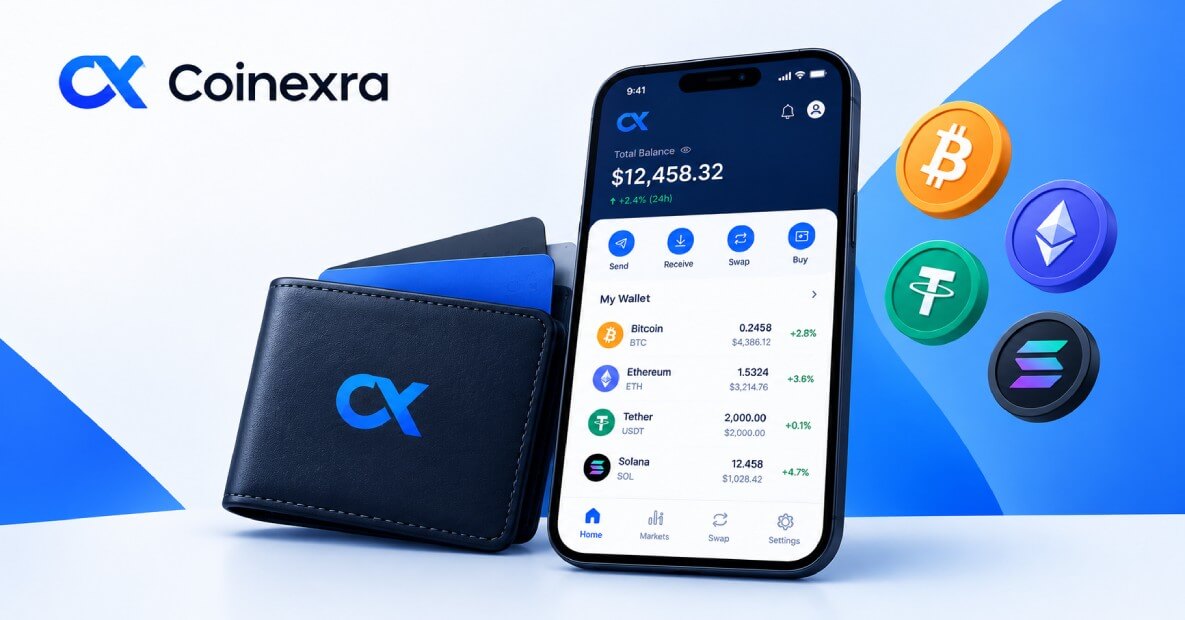
Building a crypto wallet is no longer just a matter of creating an interface where users can send and receive digital assets. A production-ready wallet requires blockchain connectivity, secure key management, monitoring, compliance capabilities, and ongoing maintenance. As a result, crypto wallet development costs can range from tens of thousands of dollars for a focused product to several hundred thousand dollars for an advanced, enterprise-grade platform.
The bigger question for a business, however, is not simply “How much does it cost to build a crypto wallet?” It is “How much of the underlying wallet infrastructure do we actually need to build ourselves?”
A custom wallet developed entirely from scratch gives a business maximum control, but it also means paying for architecture, engineering, blockchain integrations, security, testing, infrastructure, and ongoing upgrades. A white-label crypto wallet takes a different approach: businesses start with pre-built wallet infrastructure and customize it around their brand, users, features, and operating model.
For founders evaluating the two approaches, understanding this difference is critical before committing a development budget.
Crypto Wallet Development Cost Breakdown
There is no single price for crypto wallet development because two wallets that look similar to users can have completely different technology underneath them.
A basic wallet supporting a limited number of networks is very different from a multi-chain wallet with swaps, fiat on/off ramps, KYC/AML, MPC-based key management, and institutional controls.
As a practical 2026 planning range, businesses can expect the following:
| Development Approach | Indicative Cost Range | Typical Timeline |
| Basic custom wallet | $15,000–$40,000+ | 2–4 months |
| Multi-chain custom wallet | $40,000–$100,000+ | 3–6 months |
| Advanced DeFi wallet | $75,000–$150,000+ | 5–8 months |
| Custodial wallet | $80,000–$200,000+ | 5–9 months |
| MPC / institutional wallet | $150,000–$400,000+ | 6–12+ months |
| White-label wallet | $15,000–$60,000+ for typical customization | 4–8 weeks |
Building From Scratch
With custom crypto wallet development, the business funds the creation of the wallet technology stack itself. The budget can include:
- Product architecture
- UI/UX design
- Frontend & backend development
- Blockchain integrations
- Wallet and key-management infrastructure
- Security engineering
- Third-party integrations
- KYC/AML infrastructure
- Quality assurance
- Security testing and audits
- Deployment
- Ongoing maintenance
The advantage is maximum control. The trade-off is that the business also carries the development time, technical complexity, and long-term maintenance burden.
Using a White-Label Solution
A white-label wallet starts with an existing technology foundation that can be customized for the business. Instead of recreating every component, the business can focus its investment on:
- Branding and UI customization
- Required blockchain networks
- Features relevant to its users
- Third-party integrations
- Compliance requirements
- Business-specific workflows
- Deployment and launch
This can significantly reduce the amount of technology that needs to be developed from the ground up.
The final price still depends on customization. A simple branded wallet and an enterprise multi-chain wallet with advanced integrations should not be expected to cost the same.
How Much Does It Cost to Build Different Types of Crypto Wallets?
The type of wallet you plan to launch has a major impact on crypto wallet development costs. The architecture determines how keys are managed, how transactions are authorized, which infrastructure is required, and how much security and compliance engineering is necessary.
Non-Custodial Crypto Wallet
A non-custodial wallet gives users control over their private keys or signing credentials rather than having the business hold assets on their behalf. A typical development budget can start around $30,000 and reach $100,000+ as the wallet becomes more sophisticated.
Costs increase when the wallet adds:
- Multiple blockchain networks
- Advanced key-management mechanisms
- Biometric authentication
- Hardware security integrations
- Social or account recovery
- Token swaps
- DeFi functionality
The important consideration is that “non-custodial” does not automatically mean “simple.” The responsibility for secure key generation, storage, recovery, transaction signing, and user protection still creates significant engineering requirements.
Multi-Chain Crypto Wallet
A multi-chain wallet allows users to manage assets across multiple blockchain networks from one application. A reasonable planning range is approximately $40,000–$150,000+, depending heavily on the networks and functionality involved.
Each additional blockchain can introduce its own:
- Transaction formats
- Address structures
- Network fees
- RPC or node requirements
- Token standards
- Confirmation logic
- Testing requirements
- Maintenance needs
For example, supporting several EVM-compatible networks may involve a different engineering effort from integrating Bitcoin, Solana, or other networks with fundamentally different transaction models.
DeFi Crypto Wallet
A DeFi wallet typically costs more because it does more than hold and transfer assets. Depending on scope, it may connect users to:
- Decentralized exchanges
- Liquidity pools
- Lending protocols
- Staking platforms
- Yield products
- dApps
- Smart contracts
- WalletConnect
- Token bridges
A DeFi-focused wallet can therefore require $75,000–$150,000+. The more protocols and smart-contract interactions the wallet supports, the more attention must be given to transaction simulation, security testing, user warnings, and failure handling.
Custodial Crypto Wallet
A custodial wallet introduces another layer of complexity because the business takes responsibility for managing user assets. Custodial wallet development can fall around $80,000–$200,000+, depending on the custody model and operational requirements.
A custodial wallet may require:
- Secure key infrastructure
- Deposit and withdrawal management
- Transaction approval workflows
- Internal ledgering
- User verification
- KYC/AML
- Transaction monitoring
- Risk controls
- Administrative permissions
- Audit trails
- Compliance reporting
For regulated or high-volume businesses, the technology is only one part of the investment, operational and regulatory requirements can substantially affect the total budget.
MPC / Institutional Wallet
MPC, or multi-party computation, can be used to distribute key-control responsibilities rather than relying on a single private-key location. Institutional-grade wallets may require $150,000–$400,000+ depending on the architecture and enterprise requirements.
Common requirements include:
- MPC-based key management
- Multi-user approvals
- Transaction policies
- Role-based permissions
- Treasury management
- Advanced audit trails
- Institutional security controls
- Compliance workflows
- High-availability infrastructure
- Enterprise integrations
The Hidden Costs of Building a Crypto Wallet From Scratch
The initial development quote is not necessarily the amount a business will spend to operate its wallet. This is one of the biggest budgeting mistakes founders can make. A wallet can require additional investment in:
- Blockchain nodes or RPC providers
- Cloud infrastructure
- Security & Transaction Monitoring
- KYC/AML providers
- Fiat on/off-ramp providers
- Third-party APIs
- Customer support infrastructure
- Compliance updates
For example, adding a new blockchain after launch is not simply a matter of adding its logo to a list, it requires transaction handling, address management, and more. This is why crypto wallet development costs should be evaluated as a total cost of ownership rather than only an initial development quote.
White Label vs Custom Crypto Wallet: Which Costs More?
The answer depends on what is included, but the fundamental difference is straightforward:
Custom development means creating the technology foundation yourself.
White-label development means starting with an existing wallet foundation and customizing it for your business.
| Development Component | Estimated Custom Cost | Estimated White-Label Cost |
| UI/UX Design | $3,000–$8,000 | $1,500–$5,000 |
| Frontend Development | $8,000–$20,000 | $3,000–$10,000 |
| Backend Development | $10,000–$30,000 | $2,000–$8,000 |
| Blockchain Integration | $5,000–$20,000+ | $2,000–$10,000+ for additional networks |
| Wallet & Key Management | $8,000–$25,000+ | Existing infrastructure |
| Security Implementation | $5,000–$20,000+ | Included in existing infrastructure |
| KYC/AML Integration | $2,000–$8,000+ | $1,000–$5,000+ |
| Third-Party Integrations | $3,000–$15,000+ | $1,000–$8,000+ |
| QA & Testing | $3,000–$10,000 | $2,000–$7,000 |
| DevOps & Deployment | $2,000–$8,000 | $1,000–$5,000 |
| Security Audit | $5,000–$20,000+ | $1,000–$3,000+ |
| Custom Features & Modifications | $5,000–$25,000+ | $2,000–$15,000+ |
| Typical Overall Development Budget | $50,000–$200,000+ | $15,000–$60,000+ |
As the comparison shows, custom crypto wallet development can require a significantly larger upfront investment because the underlying technology must be designed from the ground up. But white-label development reduces much of that initial engineering workload by providing an existing wallet infrastructure that can be customized for the business.
Where Does White Label Actually Save Money?
The financial advantage of a white-label crypto wallet is not limited to the initial development invoice. It can reduce costs across multiple stages of the product lifecycle.
Development Time
Building from scratch requires architecture, development, integration, testing, deployment, and iteration before the wallet is ready for users.
With a pre-built wallet foundation, much of the underlying technology already exists.
This allows the business to concentrate development effort on customization rather than recreating fundamental wallet functionality.
Coinexra's white-label wallet is pre-developed and production-ready, allowing businesses to target a launch within weeks rather than spending months developing the backend from scratch.
Engineering Resources
A custom wallet can require a multidisciplinary team covering:
- Blockchain development
- Backend engineering
- Frontend development
- DevOps
- QA
- Security
- Product management
A white-label approach reduces how much of that infrastructure needs to be built internally. That can be particularly valuable for startups and fintech companies that want to allocate engineering resources toward their core product.
Infrastructure
Running a production wallet involves more than application servers. Depending on the architecture, infrastructure can include:
- Blockchain connectivity
- Cloud infrastructure
- Backup systems
- Security infrastructure
- Scaling mechanisms
Starting with an existing wallet platform can reduce the amount of infrastructure that has to be designed and assembled from zero.
Blockchain Integrations
Blockchain integration is one of the areas where complexity can grow quickly. A white-label platform with existing blockchain support can give businesses a starting point rather than requiring every network integration to be developed independently.
Coinexra's white-label crypto wallet product supports major assets, including Bitcoin, Ethereum, BNB, and stablecoins, along with ERC-20 and BEP-20 tokens and multiple blockchain networks.
Security
Security is one area where cost-cutting can become dangerous. A wallet needs protection across:
- Authentication
- Private-key management
- Data transmission
- Transaction signing
- Account access
- Device security
- Monitoring
- Recovery
Coinexra's white-label wallet includes capabilities such as encryption, two-factor authentication, biometric authentication, private-key protection, cold-storage options, and MPC-based key infrastructure.
Maintenance
With a completely custom wallet, the business is responsible for maintaining the technology stack and ensuring integrations continue to work.
With a white-label model, maintenance and technical support can be handled by the technology provider depending on the agreement. This can reduce the need to maintain a large specialist team solely for wallet infrastructure.
Time to Revenue
This is where the economics become more interesting.
Suppose two businesses have similar wallet concepts.
One spends months building the infrastructure before launching.
The other starts with a pre-built wallet foundation and spends that time customizing, testing, integrating, and preparing its go-to-market strategy.
The difference is not simply development cost.
It can also affect:
- User acquisition timing
- Partnership opportunities
- Market validation
- Revenue generation
- Investor milestones
- Competitive positioning
Time has an economic value. For a business entering a competitive crypto market, delaying launch while rebuilding infrastructure that already exists can represent an opportunity cost that never appears on a development invoice.
What Features Should You Expect in Our White Label Crypto Wallet?
A serious white-label wallet should be more than a rebranded interface. The underlying platform should provide the infrastructure required to operate a real digital-asset product.
Secure Key Management
Coinexra provides a secure foundation for managing private keys and digital assets across different wallet architectures. Businesses can configure the solution around their preferred model to protect sensitive wallet operations.
- MPC-based key management
- Custodial infrastructure
- Cold-storage options
- Secure transaction signing
- Private-key protection
Multi-Asset Support
Coinexra's wallet supports major cryptocurrencies and thousands of token assets across supported standards and networks. Our crypto wallet supports:
- Major cryptocurrencies
- Stablecoins
- Altcoins
- ERC-20 tokens
- BEP-20 tokens
- Additional blockchain-based assets
Instant Crypto Swaps
Coinexra's wallet offers built-in swap functionality that allows users to exchange supported digital assets without leaving the wallet environment. This can be powered through integrated decentralized or centralized exchange services, depending on the product architecture.
Portfolio Tracking
Our white-label crypto wallet comes with advanced portfolio tracking to make sure users can view:
- Asset balances
- Portfolio value
- Transaction history
- Market information
- Price changes
- Relevant alerts
Blockchain Explorer Integration
Explorer integration provides users with visibility into transaction status and blockchain records.
This is particularly useful for:
- Transaction verification
- Confirmation tracking
- Address activity
- Transparency
- KYC and AML Integration
For businesses operating in jurisdictions where compliance requirements apply, the wallet may need:
- Identity verification
- KYC workflows
- AML screening
- Transaction monitoring
- Reporting
- Risk controls
Coinexra's crypto wallet offering includes KYC/AML integrations, transaction monitoring, and reporting modules.
Fiat On-Ramp and Off-Ramp
A wallet can become considerably more useful when users can move between traditional currency and crypto. We also help you integrate with:
- Payment providers
- Banking partners
- Fiat gateways
- Compliance providers
Admin Dashboard
A business-focused wallet should also provide operational controls. Depending on the solution, Coinexra can help you include:
- User management
- Transaction monitoring
- KYC management
- Analytics
- Wallet management
- Alerts
Cross-Platform Access
For businesses targeting a broad audience, support across Android, iOS, and web can be important. Coinexra's current wallet product supports Android, iOS, and responsive web applications.
How to Reduce Crypto Wallet Development Costs Without Sacrificing Security
Reducing the budget does not mean removing the components that protect user assets. The better strategy is to reduce unnecessary development while protecting the critical infrastructure.
Start With the Right Feature Set
Don't launch with every possible Web3 feature. Start with the functionality your target users actually need:
- Wallet creation
- Asset management
- Send/receive
- Transaction history
- Required blockchain networks
- Authentication
- Security controls
Limit Initial Blockchain Coverage
Supporting ten networks when your users only need three can increase development and maintenance costs without adding meaningful business value. Start with the networks that align with your audience.
Use Existing Infrastructure Where It Makes Sense
Building mature infrastructure from scratch can consume capital without creating a meaningful competitive advantage. If your competitive advantage is your brand, financial product, user acquisition strategy, or distribution, rebuilding basic wallet infrastructure may not be the best use of resources.
Avoid Cutting Security
A cheaper wallet that exposes user assets to unnecessary risk can become considerably more expensive after launch. Avoid reducing:
- Authentication controls
- Key-management protection
- Security testing
- Monitoring
- Access controls
- Encryption
- Backup and recovery mechanisms
Consider White-Label Infrastructure
For businesses that want to launch faster, a white-label wallet can provide a more efficient starting point. Instead of paying to recreate Wallet infrastructure, blockchain integrations, and admin tools from the ground up, businesses can invest the funds in what actually matters.
Why Coinexra's White Label Crypto Wallet Can Be a More Practical Starting Point
For businesses that want to launch a branded crypto wallet without spending months recreating the underlying infrastructure, Coinexra's white-label crypto wallet platform provides a ready-to-deploy foundation that can be customized around the business's requirements.
Instead of starting with a blank architecture, businesses can build on an existing infrastructure and tailor it to their operating model.
Rapid Go-to-Market
Coinexra crypto wallet is pre-developed and production-ready, enabling businesses to target launch timelines measured in weeks rather than months, depending on the level of customization.
Full Brand Customization
Businesses can customize the wallet experience around their own identity. This keeps the finished product aligned with the business's brand rather than appearing as a generic third-party wallet.
Multi-Chain and Multi-Asset Support
Our wallet supports major cryptocurrencies and multiple blockchain networks, including Bitcoin, Ethereum, BNB, stablecoins, ERC-20 assets, and BEP-20 tokens. Businesses can therefore build a broader digital-asset offering without beginning every blockchain integration from scratch.
Security-Focused Infrastructure
Our wallet security capabilities include data encryption, multi-factor authentication, biometric authentication, private-key protection, and more. The exact security configuration is evaluated against the business's custody model, target market, and regulatory obligations.
Compliance-Ready Capabilities
For businesses operating in regulated markets, Coinexra's wallet supports KYC, AML, transaction monitoring, and reporting functionality.
Integrated Financial Functionality
Our platform also supports crypto swaps, portfolio tracking, blockchain explorer integration, fiat on/off-ramp integrations, and administrative controls. These capabilities allow the wallet to function as more than a basic storage application.
Ongoing Support and Scalability
Coinexra offers post-launch technical maintenance, feature updates, bug fixes, monitoring, and the ability to add new blockchain networks as requirements evolve.
FAQs
How much does it cost to develop a crypto wallet from scratch?
The cost can range from roughly $15,000–$40,000+ for a basic custom wallet to $150,000–$400,000+ for advanced MPC or institutional infrastructure. Multi-chain, DeFi, custodial, compliance, security, and enterprise requirements can increase the budget further. Current 2026 market estimates vary significantly because providers use different scopes, architectures, and development assumptions.
How much does a white label crypto wallet cost?
A white-label crypto wallet does not have one universal price. A typical customized implementation can fall around $15,000–$60,000+, while enterprise requirements can push the investment higher.
Is a white-label crypto wallet cheaper than building from scratch?
In many cases, yes, particularly when the business does not require a highly proprietary wallet architecture. The main economic advantage is that a white-label solution starts with existing infrastructure instead of requiring the business to fund the complete technology stack from zero.
How much does it cost to customize a white-label crypto wallet?
Customization costs depend on how deeply the business wants to modify the existing platform. On average, the cost for each customization falls around $3,000-$15,000. The deeper the customization goes into the underlying architecture, the closer the project becomes to custom development.
Can I launch a multi-chain wallet using your white-label software?
Yes. Coinexra's white-label crypto wallet is designed to support multiple cryptocurrencies and blockchain networks. Our product supports Bitcoin, Ethereum, BNB, stablecoins, ERC-20 and BEP-20 assets, along with broader multi-chain compatibility. Additional networks can also be integrated as the product evolves.
Is your white-label crypto wallet secure?
Coinexra's wallet incorporates security capabilities including encryption, multi-factor authentication, biometric authentication, private-key protection, MPC-based infrastructure, cold-storage options, transaction verification, and security audits.
Should I build a crypto wallet from scratch or use a white-label solution?
The right approach depends on what the business is trying to achieve. For many businesses, the decision is not simply about which option costs less. It is about where the development budget creates the most business value.
If building wallet infrastructure is not your core competitive advantage, starting with a white-label foundation can allow you to put more capital into the areas that actually differentiate your business.