
Top 10 Crypto Exchange Development Companies in 2026

Explore the best crypto exchange development companies delivering secure, scalable, and feature-rich trading platforms. Compare ratings, services, and experience to find the right partner for your exchange.

10

Companies Listed

32+

Years of Experience

1000+

Projects Delivered

Global

Service Coverage

10 Companies Found

1
Coinexra logo

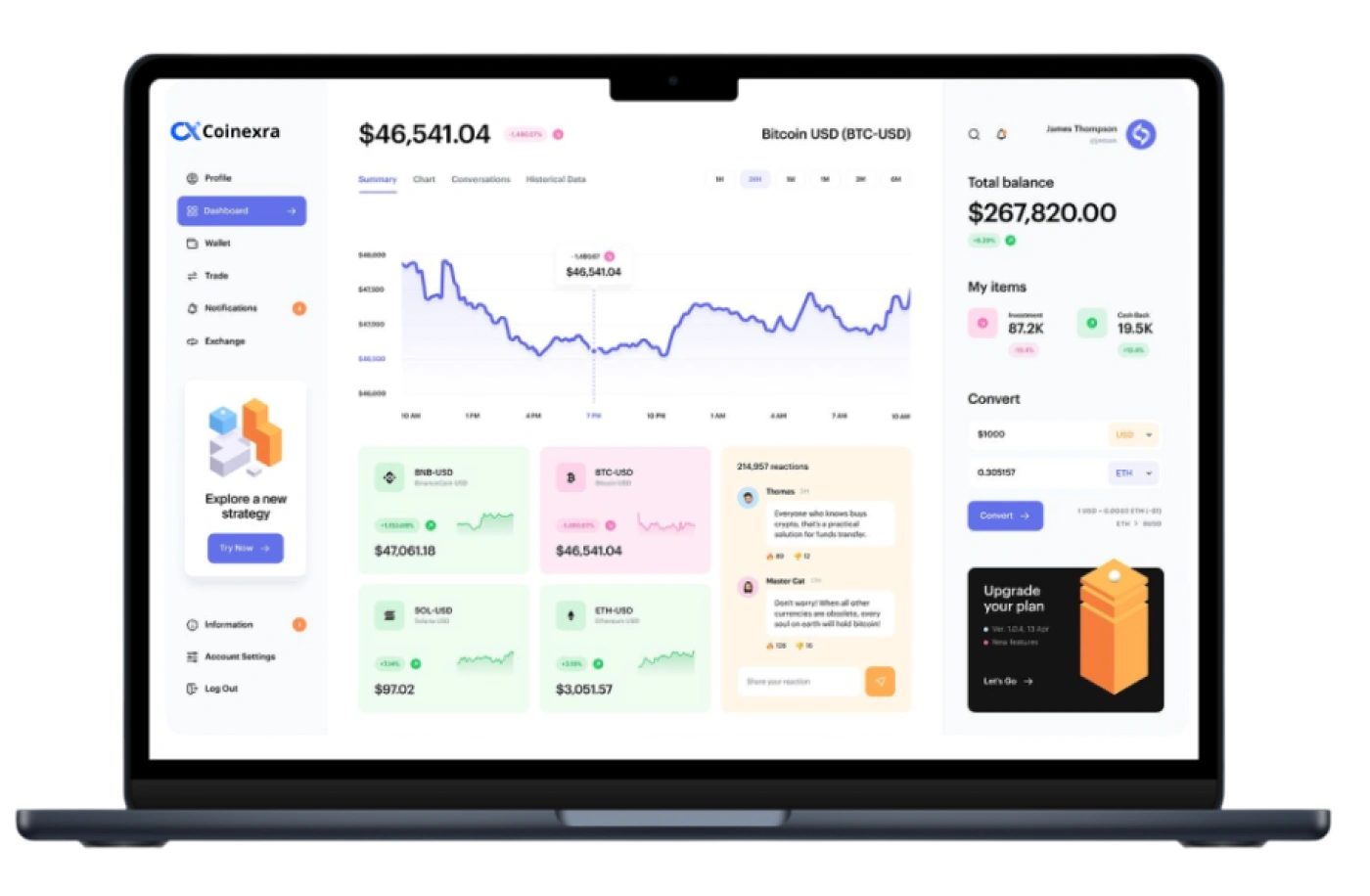
Coinexra

White-Label Crypto Exchange & Fintech Infrastructure Provider

4.8
10–50 employees$20 - $40/hrDubai, UAEFounded 2025

Coinexra provides ready-to-deploy and customizable crypto exchange infrastructure designed for businesses looking to launch a branded digital-asset trading platform without developing every core component from scratch. Its white-label exchange platform combines a trading engine, multi-currency wallet infrastructure, liquidity integrations, KYC/AML capabilities, and administrative controls.

The platform supports multiple exchange models, including spot, P2P, OTC, futures, and other derivatives, with a modular architecture that allows businesses to expand features and blockchain integrations as their requirements evolve. Coinexra standard exchange deployment can be completed in 2 - 4 weeks, with support for 10+ blockchain networks, 50+ trading and platform features, and a target order-processing latency below 100 ms.


2
Softean logo

Softean

Crypto Exchange & Blockchain Development Company

5.0
100–249 employees$25–$49/hrMadurai, Tamil Nadu, IndiaFounded 2025

Softean develops customizable cryptocurrency exchange platforms for businesses looking to launch

  • Centralized crypto exchange
  • Decentralized crypto exchange
  • Hybrid crypto exchange
  • P2P trading ecosystems

Its exchange development offering covers core trading infrastructure, multi-currency wallets, liquidity and market-making integrations, security controls, KYC/AML workflows, administrative tools, and mobile applications.

Softean also provides both white-label and custom development approaches, allowing businesses to choose between faster deployment using existing infrastructure and greater control through purpose-built exchange architecture.

Its broader exchange capabilities extend into

  • Spot Trading
  • Margin Trading
  • Futures Trading
  • Derivatives Trading

Along with advanced order types, AI-powered market intelligence, and multi-chain trading infrastructure, it is suitable for businesses planning either a focused trading platform or a more feature-rich digital-asset ecosystem.

3
Pixelplex logo

Pixelplex

Blockchain Technology & Crypto Exchange Development Company

4.9
50–249 employees$50–$99/hrNew York, New York, United StatesFounded 2007

PixelPlex develops cryptocurrency exchanges across all models, with custom approaches. Its exchange development capabilities extend across web and mobile trading platforms, OTC trading, liquidity connectivity, and payment gateway infrastructure. PixelPlex also highlights high security measures, including encryption, multi-factor authentication, DDoS prevention, proof of reserve, and transaction protection, alongside KYC/AML and KYT integrations for compliance workflows.

For businesses seeking more than a basic trading platform, PixelPlex can build individual exchange components and connect them into broader DeFi or digital-asset ecosystems. Its publicly presented portfolio includes cryptocurrency exchange projects for both professional and novice traders, while its broader company profile reports more than 450 successful projects and over 11 years of blockchain experience.

4
Instinctools logo

Instinctools

Software Engineering & Crypto Exchange Development Company

4.7
250–999 employees$25–$49/hrUSA, GermanyFounded 2000

Instinctools develops custom cryptocurrency exchange solutions, combining exchange engineering with consulting across regulatory, financial, and technical requirements. Its offering includes custom exchange architecture, multi-asset support, KYC/AML workflows, banking and payment integrations, liquidity-provider connectivity, CRM and compliance integrations, web and mobile applications, and cloud-based DevOps infrastructure.

Instinctools also highlights experience developing both exchanges from scratch and solutions built on pre-engineered infrastructure. Its publicly documented LATAM project involved building a regulated cryptocurrency exchange with banking and payment integrations, KYC/AML controls, and a backend developed independently of third-party exchange engines, providing a relevant example of its custom exchange engineering capabilities.

5
Antier Solutions logo

Antier Solutions

Enterprise Blockchain, Web3 & Crypto Exchange Development Company

5.0
500–999 employees$25–$49/hrPunjab, IndiaFounded 2011

Antier develops enterprise-grade cryptocurrency exchange platforms across centralized, decentralized, and hybrid models, with infrastructure designed for businesses seeking advanced trading and digital-asset capabilities.

Their solutions cover core trading infrastructure, liquidity integration, multi-currency wallets, fiat on/off-ramp connectivity, KYC/AML workflows, security controls, P2P trading, derivatives, copy trading, staking, and other advanced trading functionality.

Antier combines exchange development with maximum capabilities, allowing exchange projects to be integrated into larger financial ecosystems. Antier's current positioning also emphasizes work with financial institutions and regulated digital-asset infrastructure, while its exchange offering is geared toward scalable platforms with complex trading and liquidity requirements.

6
Ideasoft logo

Ideasoft

Blockchain, Web3 & Crypto Exchange Development Company

4.9
100–150 employees$50–$99/hrTallinn, EstoniaFounded 2016

IdeaSoft develops custom cryptocurrency exchange platforms for startups and enterprises, with capabilities spanning centralized, decentralized, and hybrid exchange models. Their offering covers margin trading, OTC functionality, DeFi integrations, custom trading infrastructure, and compliance capabilities.

IdeaSoft also has dedicated expertise in decentralized exchanges, including AMM, order-book, and cross-chain models, as well as white-label DEX solutions. Its publicly documented portfolio includes a cryptocurrency exchange developed for Biteeu, alongside broader Web3 and fintech projects. IdeaSoft states that its exchange development teams work with technologies including Node.js, Golang, Java, React, Solidity, Rust, and GraphQL.

7
Appinventiv logo

Appinventiv

Digital Product Engineering & Crypto Exchange Development Company

4.6
1,000–2,000 employees$49–$100/hrIndiaFounded 2015

Appinventiv develops cryptocurrency exchange solutions as part of its broader digital product engineering and blockchain development capabilities. Their offering covers custom exchange platforms, trading functionality, cryptocurrency wallets, payment integrations, and blockchain connectivity, with solutions designed for businesses ranging from startups to established enterprises.

Appinventiv combines blockchain engineering with cloud, AI, data, mobile, and enterprise software capabilities, allowing exchange projects to be integrated with broader ecosystems rather than treated as standalone trading applications. Appinventiv also brings a large engineering organization to complex projects, with the company currently stating that it has more than 1,600 technology professionals and has delivered 3,000+ digital products globally.

8
Solulab logo

Solulab

Enterprise Blockchain, Web3 & Crypto Exchange Development Company

4.9
100–250 employees$49–$99/hrIndiaFounded 2014

SoluLab develops cryptocurrency exchange platforms as part of its broader blockchain and Web3 projects, supporting businesses that need centralized, decentralized, hybrid, or P2P exchanges. SoluLab's offering covers trading infrastructure, multi-currency wallets, fiat on/off-ramp integrations, KYC/AML workflows, security controls, and blockchain integrations. SoluLab also works across adjacent digital-asset technologies, including smart contracts, DeFi, tokenization, custodial wallets, and AI, allowing exchange platforms to be integrated with broader Web3 and financial ecosystems.

9
S-PRO logo

S-PRO

Fintech, Blockchain & Crypto Exchange Development Company

4.9
100–250 employees$50–$100/hrSwitzerlandFounded 2014

S-PRO develops full-cycle cryptocurrency exchange platforms covering centralized, decentralized, hybrid/P2P, social trading, and white-label models. Their exchange capabilities include multi-currency wallets, blockchain integrations, payment gateways, KYC/AML functionality, trading modules, and security measures such as encryption, multi-factor authentication, penetration testing, and code reviews.

S-PRO also brings broader fintech and digital-asset engineering experience to exchange projects, with its current portfolio highlighting work for financial institutions and digital-asset businesses including Sygnum and AMINA Bank. S-PRO states that its cryptocurrency exchange services can be delivered through custom development or pre-built white-label infrastructure, giving businesses flexibility between a more tailored platform and a faster route to market.

10
Nadcab logo

Nadcab

Blockchain, Web3 & Crypto Exchange Development Company

5.0
50–249 employees$25–$49/hrIndiaFounded 2017

Nadcab Labs develops centralized, decentralized, P2P, white-label, and derivatives cryptocurrency exchange platforms for startups, fintech companies, enterprises, and Web3 businesses. Nadcab Labs also highlights multi-chain settlement across networks, including Ethereum, Bitcoin, Solana, Polygon, BNB Chain, Avalanche, and Tron. Nadcab Labs states that its exchange infrastructure has been deployed across 45+ jurisdictions and reports 33+ exchange platforms deployed.

Need Help Choosing the Right Partner?

Our experts can help you find the perfect crypto exchange development company for your goals, budget, and timeline.

Talk to Our Experts

Frequently Asked Questions

Practical guidance for evaluating crypto exchange development partners, costs, timelines, and white-label vs custom builds.

The right development partner should be evaluated on more than pricing or the number of features listed on its website. Before making a decision, compare providers across the areas that directly affect your exchange's launch, performance, security, and long-term scalability.

Key Factors to Evaluate

  • Look for proven cryptocurrency exchange experience
  • Choose a development model that fits your launch strategy
  • Evaluate the technology behind the trading interface
  • Understand how liquidity will be handled
  • Treat security as core infrastructure
  • Check scalability before signing
  • Verify compliance integration capabilities
  • Clarify exactly what you own: understand source-code rights
  • Compare the total cost, not just the development quote
  • Examine post-launch capabilities

Ultimately, the best provider is the one whose technology, development model, security approach, and long-term support align with your exchange's business objectives, not simply the one offering the lowest initial quote.

Crypto exchange development costs can range from $20,000 to $150,000+, depending on the exchange model, blockchain integrations, and compliance requirements. A basic exchange may typically start around $10,000–$25,000+, while an advanced custom exchange can range from $50,000–$150,000+.

Developing a crypto exchange typically takes 2 weeks to 12+ months, depending on the development approach and level of customization. A pre-built exchange can often be deployed in around 2–8 weeks, while an advanced exchange may take approximately 4–12 months.

The timeline depends on factors such as regulatory requirements and infrastructure deployment, so businesses should define the required scope before treating any timeline as a fixed commitment.

Choosing an exchange development partner based only on price, feature count, or attractive promises can create costly problems later. Before signing a contract, watch for these warning signs:

  • No Verifiable Exchange Portfolio
  • Unrealistic Launch Promises
  • Vague Technology Details
  • Security Treated as an Add-On
  • Unclear Ownership Terms
  • Hidden Recurring Costs

Before selecting a development partner, ask questions that reveal the provider's technical depth and long-term support capabilities:

  • What type of crypto exchanges have you developed?
  • Will the platform be custom-built or based on existing infrastructure?
  • What trading engine and architecture will power the exchange?
  • Which blockchains and assets can be integrated?
  • How will liquidity be provided?
  • What exactly is included in the quoted price?
  • What compliance integrations are included?

Building a crypto exchange from scratch provides maximum control, customization, and ownership, but it typically requires higher investment, specialized development resources, and a longer time to launch.

Buying white-label crypto exchange infrastructure offers a faster and more cost-efficient path by leveraging pre-built components that can be customized to match the business requirements.

While custom development may be better suited to businesses with highly specialized requirements, white-label solutions can be a practical choice for startups and entrepreneurs prioritizing faster market entry, reduced development complexity, and scalable exchange capabilities.